How Many Springs Should a Mattress Have?
There is no single correct spring count. For a queen innerspring or hybrid, most shoppers land in the range of about 300 to 1,000 coils, but coil count alone says little without knowing the coil type, gauge, height and foam layers on top. Judge the whole build, not the number on the label.
On this page (9 sections)
- What does "how many springs should a mattress have" actually mean?
- What coil counts are typical by mattress size?
- Why coil count alone won't tell you how a mattress feels
- How coil type changes the number that matters
- How thick should the spring layer be for your needs?
- How many springs do you need in a hybrid?
- How do coil counts compare with mattress size and weight?
- What else should you check instead of just the count?
- How to use a spring count when you shop
There is no single correct number of springs for a mattress. Coil count alone won't tell you whether a bed will support you, because two mattresses with the same count can feel completely different once coil type, gauge, height and foam layers are in the mix.
For a queen, most innerspring and hybrid models sit in the range of about 300 to 1,000 coils. That spread is wide, and it's why the count on its own is a weak shopping signal.
You need the rest of the build to judge whether a mattress has enough springs for you.
This guide explains what spring counts can and can't tell you, how the number changes with mattress size, and what to check instead. If you're weighing a hybrid against an all-foam bed, our guide to the best hybrid mattresses shows how the two builds differ in practice.
What does "how many springs should a mattress have" actually mean?
The question usually means: how many coils are enough for good support? The honest answer is that there is no magic number, and a mattress with more springs isn't automatically better than one with fewer.
Spring count is a raw total of coils in the unit. It doesn't say how thick each coil is, how tall it is, whether it's wrapped in its own pocket or how much foam sits above it.
All of those change the feel far more than the count.
A 500-coil unit made of sturdy 13-gauge coils can feel firmer and more supportive than a 900-coil unit built from thin, soft wire. The first number is lower, but the first mattress may hold up better under a heavier sleeper.
That's why coil count is a starting hint, not a verdict.
The count also gets inflated by the edge. Many mattress makers add extra coils around the perimeter to firm up the sides.
Those edge coils help you sit on the edge without rolling off, but they don't add much to the surface you sleep on. A bed can advertise a high count while the center feels ordinary.
Treat spring count as one clue among several, and read it alongside the coil type and the foam layers. A number with no context is easy to market and hard to judge.
What coil counts are typical by mattress size?
A bigger mattress needs more coils to cover its surface, so counts rise with size within the same product line. The exact figures vary by brand and coil type, but these ranges give you a realistic baseline for comparison.
| Size | Typical coil count range | Notes |
|---|---|---|
| Twin | About 250 to 600 | Narrower surface, so fewer coils cover it |
| Twin XL | About 250 to 650 | Same width as a twin, longer length |
| Full | About 350 to 750 | A step up from twin in both width and length |
| Queen | About 300 to 1,000 | The most common size, so the widest range |
| King | About 400 to 1,200 | Two wider sleep zones than a queen |
| California king | About 400 to 1,200 | Longer and narrower than a standard king |
These bands overlap because coil type changes the total. A pocketed-coil queen often lands higher than a continuous-coil queen from the same brand, since pocketed units pack more individual springs into the surface.
Why the ranges overlap so much
Different coil types count differently. Continuous coils run in connected rows, so a queen might use a few hundred of them.
Pocketed coils are separate springs, so the same queen might use many more to cover the same area.
Coil height matters too. Taller coils, often around 8 to 9 inches in a hybrid, give more bounce and airflow but may need a different count to fill the surface than shorter coils in a thinner innerspring.
Use the size table to spot an unusual claim, not to demand an exact figure. A queen advertised with a count far outside the typical band is worth a closer look at what else changed.
Why coil count alone won't tell you how a mattress feels
Coil count is a partial spec that gets marketed as a headline number. What you actually feel under your body is a mix of coil gauge, coil height, coil type and the foam or cover above the springs.
Start with gauge. Coil wire gauge describes the thickness of the metal, and a lower gauge number means thicker, firmer wire.
A mattress with fewer thick coils can feel sturdier than one with many thin coils, especially for heavier sleepers.
Then look at height. A taller coil compresses over a longer distance, which usually gives a springier feel and more space for air to move.
A shorter coil feels more direct and less bouncy. Neither is better in every case, but the height changes the ride.
Coil type shapes motion and contouring. Pocketed coils move independently, so one partner's movement stays more contained.
Continuous coils share their motion across the row, which can feel livelier and less isolating.
Finally, the comfort layer. A thick memory foam or gel foam top can mute the springs almost entirely.
A thin cover over the coils lets the spring feel come through. The same coil count feels firm in one build and plush in another depending on what sits on top.
How coil type changes the number that matters
The spring count means different things depending on the coil construction. Pocketed coils make the total count more meaningful, while continuous coils make it less so.
Pocketed coils: count matters more
Each pocketed coil sits in its own fabric sleeve, so the springs move separately. The total count tells you how many individual contact points sit under the mattress surface.
More pocketed coils usually mean finer contouring and better motion isolation, because each spring reacts to the body weight above it. That's why many hybrid and higher-end innerspring beds push the count up.
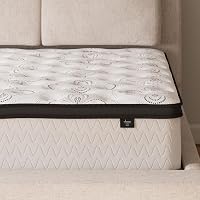
The Modway Jenna uses individually wrapped pocket coils with a layer of responsive foam above them. Its build shows how the coil type shapes the feel: the pocketed unit is meant to limit bounce and absorb motion between partners.
If you sleep with a restless partner and want that kind of isolation, a pocketed-coil hybrid like this is the design to look for.
Continuous and Bonnell coils: count matters less
Continuous coils are joined in rows or linked at the edges, so the whole unit flexes together. The count still describes how many springs there are, but the linked structure spreads movement across the surface.
A continuous-coil mattress may have fewer springs and still feel supportive, because the rows share the load. It can also feel bouncier than a pocketed unit, which some sleepers like and others don't.
When you compare two continuous-coil beds, look at gauge and height first. The raw count tells you less about the ride than those two specs do.
Our guide to the Zinus vs EGOHOME mattress shows how construction choices change the feel when you compare two beds side by side.
How thick should the spring layer be for your needs?
Coil height affects both support and airflow, and most hybrid coil units run around 6 to 9 inches. The spring layer needs enough height to absorb your weight without bottoming out, but thicker isn't automatically better for every sleeper.
A shorter coil unit, around 6 inches, gives a more direct feel and leaves more room in the profile for foam. A taller coil, around 8.5 to 9 inches, feels springier and creates more open space for air to move.
For lighter sleepers, a shorter coil under a soft foam top often feels balanced. For heavier sleepers, a taller, sturdier coil unit usually resists compression better.
The choice depends on your body weight and how much sink you want.
The spring layer also needs a matching comfort layer. Put a thin cover over tall springs and the bed feels firm and bouncy.
Put a thick memory foam top over the same springs and the feel softens considerably. If you're weighing overall mattress depth as well, our guide on how thick should a mattress be covers how the spring layer and foam layers combine into a finished profile.
Match coil height to your weight and feel preference, not to the highest number you can find. A moderate coil unit with the right foam above it beats an extreme one that's mismatched to the sleeper.
How many springs do you need in a hybrid?
A hybrid combines a coil base with a foam top, so the spring count should be read together with the foam layer. For most shoppers, a queen hybrid in the range of about 400 to 1,000 coils gives a sensible balance of support and contouring.
The foam layer changes what the count delivers. A hybrid with a thick memory foam top uses the springs mainly for support underneath, so a moderate count works fine.
A hybrid with a thin comfort layer lets the springs do more of the work, so the count and gauge matter more to the feel.
The Linenspa 10 Inch Hybrid Queen pairs memory foam with a coil base in a medium-firm feel aimed at back and stomach sleepers. Its build suits buyers who want some spring support and airflow without the all-foam sink.
For a guest room or a first hybrid, that balanced combination is a practical place to start.
The Classic Brands Decker 10 Inch Firm Hybrid Queen combines a quilted knit cover, gel memory foam and pocketed coils in a firmer build. If you want a hybrid with a firmer feel and a bit more foam on top, this one leans that way.
If you prefer an all-foam bed instead, our roundup of the best memory foam mattress covers that category.
Aim for the middle of the range for your size and sleep position, then let the foam layer and firmness decide the final choice. A hybrid doesn't need the highest count to feel supportive.
How do coil counts compare with mattress size and weight?
A spring count that feels supportive for one sleeper can feel thin for another, so weight and mattress size change what's enough. Heavier sleepers put more load on each coil and benefit from sturdier wire and a higher count.
For a lighter sleeper, around 130 lb or less, a moderate count in a softer build can feel balanced. The springs don't compress as far, so the count doesn't need to be high to keep the surface from bottoming out.
For a heavier sleeper, a sturdier gauge and a higher count help spread the load across more contact points. A thick comfort layer can compensate for a modest coil unit, but the springs still do the base support.
Size also matters. A king spreads two people over a wider surface, so the count per person is lower than a queen with the same total.
When you compare across sizes, divide the count by the sleeping area to see how much coil each person gets.
Use your weight and the mattress size together when you judge a count. A number that's right for a lighter sleeper in a queen may be light for a heavier sleeper in the same size.
What else should you check instead of just the count?
The count is only one line in the spec sheet. Check coil gauge, coil height, coil type, the foam layer and the warranty, and the number starts to make sense in context.
Coil gauge tells you how firm the wire feels. Coil height tells you how much travel the spring has.
Coil type tells you how motion is handled. The foam layer tells you how much of the spring feel actually reaches you.
The warranty hints at how confident the maker is in the build holding up.
The cover matters more than people expect. A quilted cover over the coils adds padding and softens the spring feel.
A thin knit cover lets the springs come through. The cover also affects airflow and how the mattress feels when you first lie down.
Balance the count against those specs and your own needs, and you'll read a mattress ad the way a buyer should. A high count with thin coils and a thin cover may feel less supportive than a moderate count with sturdy coils and a padded top.
How to use a spring count when you shop
Spring count is a starting hint, not a final answer. Use it to narrow a list, then judge each mattress on its full build against your weight, sleep position and feel preference.
Start by noting the count and the size. Compare it with the typical band for that size, and flag anything far outside it.
Then read the coil type, gauge and height, and see how much foam sits above the coils.
Next, match the build to how you sleep. Back and stomach sleepers usually want a firmer surface with less sink.
Side sleepers often want more contouring, so a softer foam top over pocketed coils can suit them better.
Finally, factor in partners and use. If you share the bed with a restless sleeper, pocketed coils and motion isolation matter more than a high count.
For a guest room, a moderate hybrid in a medium feel covers more people than an extreme build.
Ask how many springs a mattress should have, and the real answer is "enough for your body and your build." Judge the count alongside coil gauge, height, type and foam, and you'll pick a bed that supports you well. For buyers who want the hybrid option laid out plainly, the best hybrid mattresses roundup is the next stop.
Frequently asked questions
Is a higher coil count always better?
No. A higher count can give you more contact points, but only if the coils are a sensible gauge and height and the foam above them is matched to your weight and sleep position.
A high count in thin, weak coils can feel less supportive than a lower count in sturdy ones.
How many coils does a king mattress usually have?
A king often lands somewhere around 1.5 to 2 times the count of a queen from the same line, because the sleeping surface is wider. Many king innerspring and hybrid models sit in the range of roughly 400 to 1,200 coils, depending on the brand and coil type.
Do pocketed coils and continuous coils count the same way?
No. Pocketed coils are individually wrapped, so each one moves on its own and the total count matters more for motion isolation and contouring.
Continuous or Bonnell coils are joined in rows, so the count tells you less about how the bed will feel.
Does a thicker mattress always mean more springs?
Not necessarily. Thickness comes from the coil height plus the foam and cover layers, and a thick comfort layer can sit over a modest coil unit.
Check the coil height and layer breakdown, not just the overall profile, if spring support is your priority.
Should I count springs when comparing a hybrid to a foam mattress?
Only when you are comparing two innerspring or hybrid beds. A memory foam mattress has no springs at all, so a count comparison does not apply.
Compare foam density and layer thickness instead when a foam bed is in the running.
What coil count should I look for in a guest room mattress?
For a guest room, a moderate queen count in the 400 to 800 range with a medium feel usually covers a wide mix of sleepers. Guest beds get less use and less fine-tuning, so a balanced hybrid is a safer choice than chasing an extreme count.