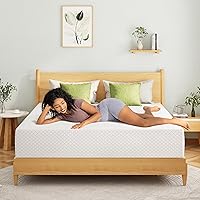
Mattress in a Box Buying Guide: What to Know First
A mattress in a box works for most people if you match the thickness and foam type to your body and base. A 10-inch medium mattress suits most sleepers, so the real buying decision is whether the foam stays cool, whether your frame supports it and whether you can wait for it to expand.
On this page (10 sections)
- What does buying a mattress in a box actually get you?
- Why thickness changes who the mattress suits
- Which foam type fits your sleep and your cooling needs?
- What base does a boxed mattress need?
- How long does a boxed mattress take to expand?
- Is a medium feel the safe default for most sleepers?
- What should you check before you order?
- Which mattress in a box fits which sleeper?
- What is the best time to buy a mattress in a box?
- The decision rule for a mattress in a box
A mattress in a box is a real mattress that arrives compressed, rolled and shipped in a carton. It works well for most people when the build matches your body and your bed frame.
The buying guide mattress in a box questions below cover the checks that actually change the decision.
This matters because the box hides a lot. You can't press the foam in a store, so thickness, foam type, cooling, base fit and expansion time carry the whole decision.
We compared specs and buyer-facing details across three popular 10-inch models to show how those factors play out. Each choice below ends with a firm rule you can apply to any brand.
What does buying a mattress in a box actually get you?
Buying a mattress in a box gets you a compressed foam or hybrid mattress delivered to your door, with no showroom and no delivery crew. The build is the same idea as a store mattress, just packed tighter for shipping.
The compression is temporary. Once the carton opens, the foam draws air and returns to its full height, which is why the first hours matter more than the first minute.
Most boxed mattresses fall into two builds:
- All-foam: layers of memory foam and support foam in one block. Lighter, quieter and good at motion isolation.
- Hybrid: a foam comfort layer over a coil unit. Bouncier, with more airflow through the springs.
Each has a real trade-off. Foam alone can trap heat and feel slow to move on.
Coils alone can feel stiff. A hybrid blends both, which is why the Linenspa pairs memory foam with steel coils.
What the box format changes is convenience and cost, not the basic physics of sleep. You still need the right firmness, the right thickness and a base that lets air move.
Pick a hybrid if you want bounce and airflow; pick all-foam if you want quiet motion isolation. Then use the rest of this guide to narrow the layer details.
Why thickness changes who the mattress suits
Thickness decides how much foam sits between you and the base. A 10-inch mattress suits most adults, while 12 inches and up adds more comfort layer for heavier sleepers.
Here's how the common profiles split in practice:
| Thickness | Best for | Watch out for |
|---|---|---|
| 6 to 8 in | Kids, guest rooms, bunk beds | Thin comfort layer for heavy adults |
| 10 in | Most adults and everyday beds | Little margin for very heavy sleepers |
| 12 in and up | Heavier sleepers, couples wanting more foam | Higher weight and higher price |
Thickness is not firmness. A 10-inch medium mattress and a 12-inch medium mattress can feel similar underfoot, but the thicker one has more material to absorb pressure before you reach the support core.
It also affects base fit. A deep mattress on a low-profile platform can push the sleeping surface higher than you expect, which matters for bunk beds and trundles.
Heavier sleepers should lean thicker because foam compresses under load. A 10-inch medium build can bottom out for someone well above average weight, while the same person on 12 inches keeps more comfort layer underneath.
Pick 10 inches for a standard adult bed, and move up to 12 or more if you weigh over about 230 lb or share with a heavier partner. Check the mattress height against your headboard before you order.
Which foam type fits your sleep and your cooling needs?
Foam type sets how the mattress feels and how warm it sleeps. Memory foam contours and isolates motion, while gel and open-cell foams are built to move heat away.
The three models we compared show the range:
Memory foam and hybrids
Memory foam softens with body heat and molds to your shape. It's the layer that relieves pressure at shoulders and hips, and it's the layer that can feel warm after a few hours.
A hybrid like the Linenspa puts a memory foam layer over Bonnell coils. The coils keep the surface responsive and let air move through the base, which offsets some of the foam's heat.
Gel and cooling foams
Gel memory foam adds gel particles to the foam, and makers say it pulls heat away from the body. Zinus uses cooling gel memory foam in its Cooling Essential build with a breathable cover.
Open-cell foam is the other approach. Casper says its Flex Foam has an open-cell structure that keeps air flowing, which is aimed at the same overheating problem from a different angle.
Neither method turns a foam mattress into a cool mattress. They reduce heat buildup compared with dense traditional memory foam.
Pick gel or open-cell foam if you sleep hot or share a bed; pick plain memory foam if you want maximum contouring and sleep cool. Then check the cover, since a breathable cover matters as much as the foam inside.
For a closer look at how softness and support interact, our buying guide mattress firmness breaks down the full soft-to-extra-firm range.
What base does a boxed mattress need?
A boxed mattress needs a flat, even base with airflow under it. A platform bed, slatted frame, solid foundation or adjustable base all work for most foam and hybrid models.
The base does two jobs: it holds the foam flat so it doesn't sag into gaps, and it lets moisture escape. Foam collects heat and body moisture, so trapped air underneath shortens its life.
Slatted bases need close slats. Wide gaps let the foam dip between them, which shows up first as a soft spot and later as a sag.
A slat gap of about 3 inches or less is the usual guide for foam.
You don't need a box spring with most boxed mattresses. A hybrid like the Linenspa works with a box spring, slatted base or solid foundation, and so does the Zinus.
For the full comparison, read does a mattress need a box spring.
Check the base weight limit too. A queen hybrid can weigh more than an all-foam model, and the frame, not the mattress, carries that load.
Pick a platform or slatted base for airflow and a solid foundation for a firm feel; skip the old box spring unless the maker lists it as required. Measure the base before the mattress arrives so the first night isn't spent rearranging the bedroom.
How long does a boxed mattress take to expand?
A boxed mattress usually takes 24 to 72 hours to reach full height. Most of the expansion happens in the first few hours, and the last bit of loft fills in over the next couple of days.
Warm rooms speed it up. Linenspa notes its memory foam may expand faster in a warm room, and Zinus gives the same 24 to 72 hour window.
Casper ships compressed as well and expects the foam to recover once unpacked.
Set the mattress on its base before you cut the wrap. It expands upward and outward, so a flat, clear surface makes the process easier and safer.
Expect a slight packaging smell for the first day or two. Certified foam, such as the CertiPUR-US foam in all three models here, is made to low emission standards, but the smell still needs air.
Don't judge the feel on night one. The foam is at its firmest straight out of the box, and the surface softens as it warms and settles.
Our guide to how long does a mattress take to expand covers the timeline in more detail.
Wait the full 24 to 72 hours, then give it a week of nights before you decide it's too firm. If a corner still hasn't risen after three days, contact the seller rather than sleeping on a lopsided surface.
Is a medium feel the safe default for most sleepers?
A medium feel is the safest default because it supports the widest range of sleep positions. All three mattresses here are medium, which tells you how common that choice is.
Medium sits between soft and firm. It cushions enough for side sleepers to avoid shoulder and hip pressure, and it stays supportive enough for back and stomach sleepers to keep the spine lined up.
The catch is that "medium" is not a standard. One brand's medium can feel firmer than another's, so the label alone won't tell you how it sleeps.
Layer thickness and foam density do more of the work.
For most people, medium is the right first bet:
- Side sleepers get pressure relief without sinking too deep.
- Back sleepers get support through the lower back.
- Stomach sleepers stay supported if the foam isn't too soft.
- Combination sleepers get a surface that works in more than one position.
If you know you like a plush feel or need extra firm support, medium may not fit. That's where a firmness guide and a generous trial period matter more than the label.
Pick medium if you have no strong preference; pick soft for light side sleepers and firm for heavy back or stomach sleepers. When you're between two feels, choose the firmer one, since a topper can soften a mattress but can't firm one up.
What should you check before you order?
Before you order, check the warranty, the trial terms, the certifications and the weight. These four details decide what happens after the mattress arrives, not how it feels on night one.
The warranty is the long game. A 10-year limited warranty is the common standard, and all three models here carry one.
Read what it covers, since sagging depth and staining are the usual sticking points.
The trial is the short game. Casper offers a 100-night trial on the Element, which gives you time to judge the feel past the break-in period.
Not every brand offers one, so check before you buy.
Certifications tell you what's in the foam. CertiPUR-US covers foam content and emissions, and an OEKO-TEX Standard 100 cover adds a check on the fabric.
Zinus states both, and its build uses a carbon-rayon flame barrier instead of fiberglass.
Weight matters for delivery and for the frame. A 10-inch queen foam mattress can weigh about 57 to 68 lb, so plan for two people on stairs and confirm the base limit.
Check the warranty length, the trial window, the foam certifications and the mattress weight before you order. A mattress that fits your body but not your frame or your return window is the wrong buy.
Which mattress in a box fits which sleeper?
The right mattress in a box comes down to your base, your sleep temperature and how much you want to spend. Here are the three we compared, and who each one suits.
The Zinus 10 Inch Cooling Essential Queen is the strongest all-round pick here for most people. Its gel memory foam and breathable cover target hot sleepers, and the medium feel works for side, back and combination positions.
It sits on any flat base you already own, so you don't need to replace the frame. Its 10-year limited warranty matches the other two, and the carbon-rayon flame barrier means no fiberglass in the build.
Pick it if cooling and price matter most and you want a simple foam mattress.
The Casper Element Queen is the pick for couples and anyone who wants a trial window. Its open-cell foam is designed to keep air moving, and the foam layers absorb motion so a partner's movement doesn't carry across the bed.
The medium feel suits all three main sleep positions. The 100-night trial is the standout feature, since it lets you test the feel past the break-in period with a return option.
Pick it if you share a bed and want time to decide.
The Linenspa 10 Inch Hybrid Queen is the pick for anyone who wants a springy feel or runs hot. The Bonnell coil base gives it more bounce and airflow than the two foam models, while the memory foam top layer still contours at the shoulders and hips.
It's also the most flexible on bases, working with a box spring, slats, a solid foundation or an adjustable base. It suits guest rooms, kids' rooms and bunk beds as well as a primary bedroom.
Pick it if you dislike the slow sink of all-foam or want one mattress for a spare room.
What is the best time to buy a mattress in a box?
The best time to buy is when the model you want is discounted and you have time to test it. Boxed mattresses go on sale around major holidays, and the trial window matters more than the exact date.
A lower price is worth little if the return window is short. Check the trial length alongside the discount, since a mattress you can't send back is a bigger risk than a small saving.
Seasonal sales cluster around long weekends, back-to-school and end-of-year events. If you aren't in a hurry, waiting for one of those windows can cut the price without changing the mattress.
For the full calendar and the reasoning behind it, read what is the best time of year to buy a mattress.
Pick the sale window that comes with a full trial and a base you already have. A mattress bought at full price with a long trial usually beats a bargain you can't return.
The decision rule for a mattress in a box
The short version: match the thickness and foam type to your body, then confirm the base and the trial. A 10-inch medium mattress covers most sleepers, and the three builds here cover the main cooling and feel preferences.
Use this rule to choose:
- Pick the Zinus Cooling Essential Queen if you sleep hot and want the best value. Gel foam and a fiberglass-free build make it the strongest all-rounder.
- Pick the Casper Element Queen if you share a bed or want a trial. Open-cell foam and motion isolation suit couples.
- Pick the Linenspa Hybrid Queen if you want bounce or need base flexibility. Coils and memory foam work on almost any frame.
Whichever you choose, set it up on the right base and wait out the expansion window before judging the feel. That's the whole buying guide mattress in a box in one line: the box is the delivery method, and the build is what you actually sleep on.
Frequently asked questions
Is a mattress in a box as good as a regular mattress?
Often it is. Boxed mattresses use the same foam and hybrid builds as store models and skip the showroom cost.
The quality varies by brand and layer count, so check the thickness, foam type and warranty rather than judging by the delivery format.
How heavy is a mattress in a box?
A 10-inch queen foam mattress can weigh around 57 to 68 lb, and hybrid builds tend to weigh more because of the coil unit. Two people should carry a queen up stairs, and you may want to slide the box rather than lift it.
Can you use a mattress in a box on the floor?
A foam mattress can sit on a flat, clean floor for a short time, but the floor gives no airflow under the foam. Use a slatted base or platform bed for long-term sleeping so moisture can escape and the foam keeps its shape.
Do boxed mattresses need a special frame?
No. Most fit a platform bed, slatted frame, solid foundation or adjustable base, and hybrids like the Linenspa work with all four.
Check the slat gap and the base weight limit, since foam needs close, even support.
How long should you wait before sleeping on a new boxed mattress?
Wait the full expansion window first, which is usually 24 to 72 hours. Then give the foam several more nights to soften and lose its packaging smell before you judge the feel, since a firm first night often eases within a week.
Is fiberglass a real concern in boxed mattresses?
Some budget foams have used fiberglass as a flame barrier, so check the build before buying. Zinus and Linenspa both state their mattresses are fiberglass free and use certified foam, which is the label to look for if this matters to you.