Mattress Firmness Buying Guide: Soft to Extra Firm
Most people should start with medium firm (about a 6 or 7 on the 1 to 10 scale), because it supports the spine while still cushioning the hips and shoulders. Side sleepers lean softer, back and stomach sleepers lean firmer, and heavier sleepers need more support than light ones.
On this page (12 sections)
- What do the firmness labels actually mean?
- Which firmness suits your sleep position?
- How does body weight change the firmness you feel?
- How do mattress materials affect the feel?
- What is the firmness scale, in plain terms?
- Which firm mattress should you pick first?
- How should you test a mattress before buying?
- Can you change a mattress's firmness after purchase?
- How does price affect the firmness you can get?
- What mistakes should you avoid when choosing firmness?
- How do you choose the right firmness in one pass?
- What else should you check before you order?
The mattress firmness buying guide starts with one rule: medium firm suits most people. It supports the spine while cushioning the hips and shoulders, so it works for a wide range of sleepers who are not sure where to start.
The feel you pick matters more than the brand name on the label. The same mattress can feel firm to one person and soft to another, because body weight and sleep position change how far you sink in.
This guide walks you through the scale, the sleep-position rules and the ways to test a bed before you commit. For a shortlist of the best supportive options, see our Best Firm Mattresses roundup.
What do the firmness labels actually mean?
The 1 to 10 firmness scale runs from softest (1) to firmest (10), but makers set their own numbers. A mattress labeled 7 by one brand can feel softer or firmer than a 7 from another brand.
Treat the scale as a starting point, not a standard. The materials underneath change the feel too.
A foam core compresses differently from pocketed coils, and a thick comfort layer can make a firm core feel soft at the surface.
Most makers group their beds into a few bands:
- Soft (2 to 4): deep cushioning that hugs the body.
- Medium (5 to 6): balanced, with some sink and some support.
- Medium firm (6 to 8): the most common range, supportive with light cushioning.
- Firm to extra firm (8 to 10): minimal sink and a flat, stable surface.
The bands overlap, which is why two "firm" beds can feel different. Compare specs carefully rather than trusting a single number.
One useful check is the comfort layer. A thin foam top over a dense core feels firmer than a thick top over the same core.
When you compare beds online, look at the layer thickness, not just the firmness label. Our firm mattress buying guide digs into those layers in more detail.
Which firmness suits your sleep position?
Your main sleep position is the best single clue to the firmness you need. Each position changes how the spine lines up and where your body presses into the bed.
- Side sleepers need cushioning at the shoulder and hip so the spine stays straight. Medium to medium firm, around 5 to 7, usually works best.
- Back sleepers want the pelvis supported so it does not sag. Medium firm, around 6 to 8, keeps the lower back closer to neutral.
- Stomach sleepers need a flat, firm surface to stop the hips from dropping. Firm to extra firm, around 7 to 9, is the safer range.
- Combination sleepers move between positions, so medium firm, around 6 to 7, is the most flexible pick.
Sleep position is not the whole story. People with back pain often prefer medium firm, and the health rules here mean we make no promises about pain relief.
If you have ongoing pain or a sleep problem, talk to a doctor.
How does body weight change the firmness you feel?
Heavier sleepers sink deeper into the same mattress, so the feel shifts firmer or softer depending on your weight. A 7 for a light sleeper can feel like a 5 for someone much heavier.
The general rule:
- Light sleepers (under about 130 lb) sink less, so a soft or medium bed may already feel firm enough. They often do well in the 4 to 6 range.
- Average sleepers (about 130 to 200 lb) get the most predictable results from medium firm, around 6 to 7.
- Heavier sleepers (over about 200 lb) press deeper into foam. They usually want firm to extra firm, around 7 to 9, for real support under the hips.
Weight also matters for couples. If two sleepers are far apart in size, the heavier person often needs the firmer side.
A split-firmness mattress or a firm core with a softer topper can bridge the gap.
How do mattress materials affect the feel?
Materials decide how the mattress responds under your body. Foam, coils, latex and hybrid builds each translate the firmness number into a different real-world feel.
- Memory foam contours and absorbs motion. It can feel softer than its number because it takes the shape of your body.
- Poly foam bounces back faster and feels firmer and cooler than memory foam.
- Pocketed coils give a springier, more supportive feel, with motion isolation when the coils move separately.
- Latex is dense and responsive. It feels firmer and more buoyant than foam at the same label.
- Hybrids pair a coil base with a foam top, blending support with surface cushioning.
A mattress that mixes gel memory foam with pocketed coils, like the Beautyrest Silver BRS900, can feel firm but still cushion the lower back. The materials decide whether "extra firm" means flat and hard or supportive and stable.
Our CertiPUR-US mattress guide explains why certified foam matters for indoor air quality when you choose a foam or hybrid bed.
What is the firmness scale, in plain terms?
The scale only helps if you can picture what each number means under your body. Here is how the bands feel when you lie down.
Soft (2 to 4): deep cushioning for side sleepers
A soft mattress lets the shoulders and hips sink in, which eases pressure for side sleepers and light bodies. Stomach sleepers and heavier sleepers often find it too deep.
Medium to medium firm (5 to 8): the safe middle
This range supports the spine and still cushions the body. Medium firm, around 6 to 7, is where most sleepers land and where most first-time buyers should start.
Firm to extra firm (8 to 10): flat, stable support
An extra firm bed barely gives under your weight. It suits stomach sleepers, heavier sleepers and anyone who dislikes sink.
Side sleepers often find it too hard at the shoulder.
How to compare the numbers across brands
Because labels are not standardized, compare the build as well as the number. Check the comfort-layer thickness, the core type and the cover.
A firm bed with a thick foam top feels softer than a thin foam top over the same core.
Our score weighs specs, features and buyer feedback against what you're shopping for. Use it to shortlist two or three beds, then compare their layers before you decide.
Which firm mattress should you pick first?
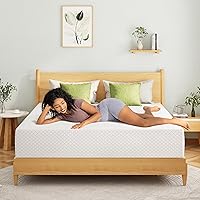
If you want a firm bed without overthinking it, the Zinus 12 Inch Green Tea Queen is the strongest all-round pick among the three options here. Its medium firm feel sits in the sweet spot between cushioning and support.
- Best overall: Zinus 12 Inch Green Tea Queen. Medium firm feel, memory foam comfort layer and a breathable knitted cover, suited to side, back and stomach sleepers.
- Best for extra-firm fans: Beautyrest Silver BRS900 Extra Firm King. Pocketed coils with gel memory foam lumbar support for a flat, stable surface.
- Best for simple setup: Kin by Tuft & Needle Firm 8 Inch Queen. A firm foam bed in a box at an accessible price point.
Pick the Zinus if you are not sure. Pick the Beautyrest if you know you want the firmest feel.
Pick the Kin if you want a firm foam bed with an easy unboxing and a low fuss setup.
How should you test a mattress before buying?
Try before you buy whenever you can, and give the mattress at least 30 nights to settle in when you buy online. The first night rarely tells you the truth about firmness.
If you can lie on a floor model, spend 10 to 15 minutes on your usual sleep position. Notice whether your hips and shoulders sink evenly.
If one side of your body presses deeper, the bed may be too soft or too firm for you.
When you buy online, use the trial period. Most foam beds need 24 to 72 hours to fully expand after unboxing.
Judge the feel after a few weeks, not on day one. Return a bed inside the trial window rather than live with the wrong feel.
Keep your receipts and read the return terms before ordering. A trial period only helps if you know the deadline.
For the best moment to shop, see what is the best time of year to buy a mattress.
Can you change a mattress's firmness after purchase?
You can tweak the surface feel, but you cannot change the core support without replacing the mattress. Think of toppers and foundations as fine-tuning, not a rebuild.
A mattress topper is the easiest fix for a bed that feels too firm. A 2 to 3 inch soft or medium topper adds cushioning at the shoulder and hip.
It can make a firm foam bed feel closer to medium firm.
For a bed that feels too soft, a firmer foundation or a thin, dense pad can help a little. A slatted base with close spacing or a flat platform also gives better support than a sagging box spring.
These tweaks shift the feel by a small amount. A mattress that is far too firm or far too soft stays that way.
If the feel is wrong after 30 nights, return it inside the trial window rather than layer on toppers.
How does price affect the firmness you can get?
Firmness and price are only loosely connected. You can find a firm feel at budget, mid-range and premium prices, but the materials and the trial terms change as you spend more.
Budget foam beds, like the Kin by Tuft & Needle Firm 8 Inch Queen, offer a firm feel at an accessible price point. Mid-range hybrids add coils, cooling layers and thicker comfort foam.
Premium beds add denser cores and longer warranties.
Set your budget first, then match the materials to it. A budget firm foam bed can be a great first mattress.
A hybrid with pocketed coils and gel memory foam often sleeps cooler.
Check what the price includes: the trial period, the warranty and the shipping terms. A cheaper bed with no trial is a bigger risk than a slightly pricier bed you can return.
Our score uses specs and features, not price, so use it alongside your budget.
What mistakes should you avoid when choosing firmness?
The most common mistake is picking a bed based on the label alone. A "firm" mattress from one brand can feel like a medium from another.
Other mistakes to skip:
- Testing for two minutes. Lie down for 10 to 15 minutes on your usual sleep position before judging.
- Ignoring your body weight. A light sleeper and a heavier sleeper feel the same bed differently.
- Buying for a partner's preference. If you share a bed, weigh both sleepers' positions and sizes.
- Rushing the trial. Give the bed about 30 nights before you decide, and note the return deadline.
- Expecting a topper to fix a bad core. A topper softens the surface, but it cannot change the support underneath.
The best move is to shortlist two or three beds in the band that matches your position and weight. Then compare the materials and the trial terms, and pick the one that fits your routine.
How do you choose the right firmness in one pass?
Start with medium firm, then adjust for your position, weight and preferences. Pick medium firm (6 to 7) for most sleepers, softer (4 to 6) for light side sleepers, and firmer (8 to 9) for stomach sleepers and heavier bodies.
Pick the Zinus 12 Inch Green Tea Queen if you want a balanced medium firm bed for most sleep positions. Pick the Beautyrest Silver BRS900 Extra Firm King if you know you want the firmest, flattest feel.
Pick the Kin by Tuft & Needle Firm 8 Inch Queen if you want a simple firm foam bed in a box.
Give the bed about 30 nights, keep the trial deadline in mind, and use a topper only for small tweaks. This mattress firmness buying guide gives you the decision rule; the rest is your own sleep test.
What else should you check before you order?
Firmness is the headline, but a few practical details decide whether the bed works in your room. Measure your space and your doorway before you order, since a king mattress will not fit through every stairwell or hall.
Check the foundation the mattress needs. Foam beds usually work on a flat platform, while coil and hybrid beds may need a box spring or slatted base.
Confirm the warranty terms and the trial length too.
Think about how the bed will arrive. A mattress in a box ships compressed and expands within 24 to 72 hours.
A traditional mattress may need a delivery appointment and a room-of-choice setup.
If you share the bed, plan for two sleepers' needs at once. A split-firmness build or a firm core with a softer topper on one side can keep both people comfortable.
For more on foam safety and certifications, read our CertiPUR-US mattress guide.
Finally, check the return policy. A bed you can return inside the trial window is a safer buy than one you are stuck with.
Use the Best Firm Mattresses list and our firm mattress buying guide to narrow the field, and shop when sales are best by reading what is the best time of year to buy a mattress.
Frequently asked questions
What firmness is best for most people?
Medium firm, roughly a 6 or 7 on the 1 to 10 scale, suits most sleepers. It supports the spine without letting hips and shoulders sink too deep.
Side sleepers often do better slightly softer, while back and stomach sleepers usually want firmer.
What does firmness 1 to 10 actually mean?
The 1 to 10 scale is a label makers assign to a mattress feel. One is the softest and 10 the firmest.
The numbers are not standardized across brands, so a 7 from one maker may feel firmer or softer than a 7 from another.
Is a firm mattress better for back sleepers?
A firm mattress often suits back sleepers because it keeps the pelvis and shoulders closer to one plane. Medium firm is a safer starting point, though.
Very firm beds can leave pressure points at the shoulders and lower back for some people.
How long should I try a mattress before judging firmness?
Give a new mattress about 30 nights before judging the feel. Most foam beds need 24 to 72 hours to expand after unboxing.
Bodies also need time to adjust to a new surface, so the first week rarely tells the whole story.
Can I make a mattress softer or firmer after I buy it?
Yes, within limits. A mattress topper softens the surface, and a firm foundation or a thin, dense pad can make a too-soft bed feel a little firmer.
These tweaks change the feel slightly, not the core support.
How much should I spend on a mattress?
Set a budget before you shop, since prices range from budget to premium. A mattress is a long-term purchase, so weigh price against the materials and the trial period.
Spending more does not guarantee a better match for your body.